
About
I was going to India to become a monk. It turned out my teacher was sending me to a hospital.
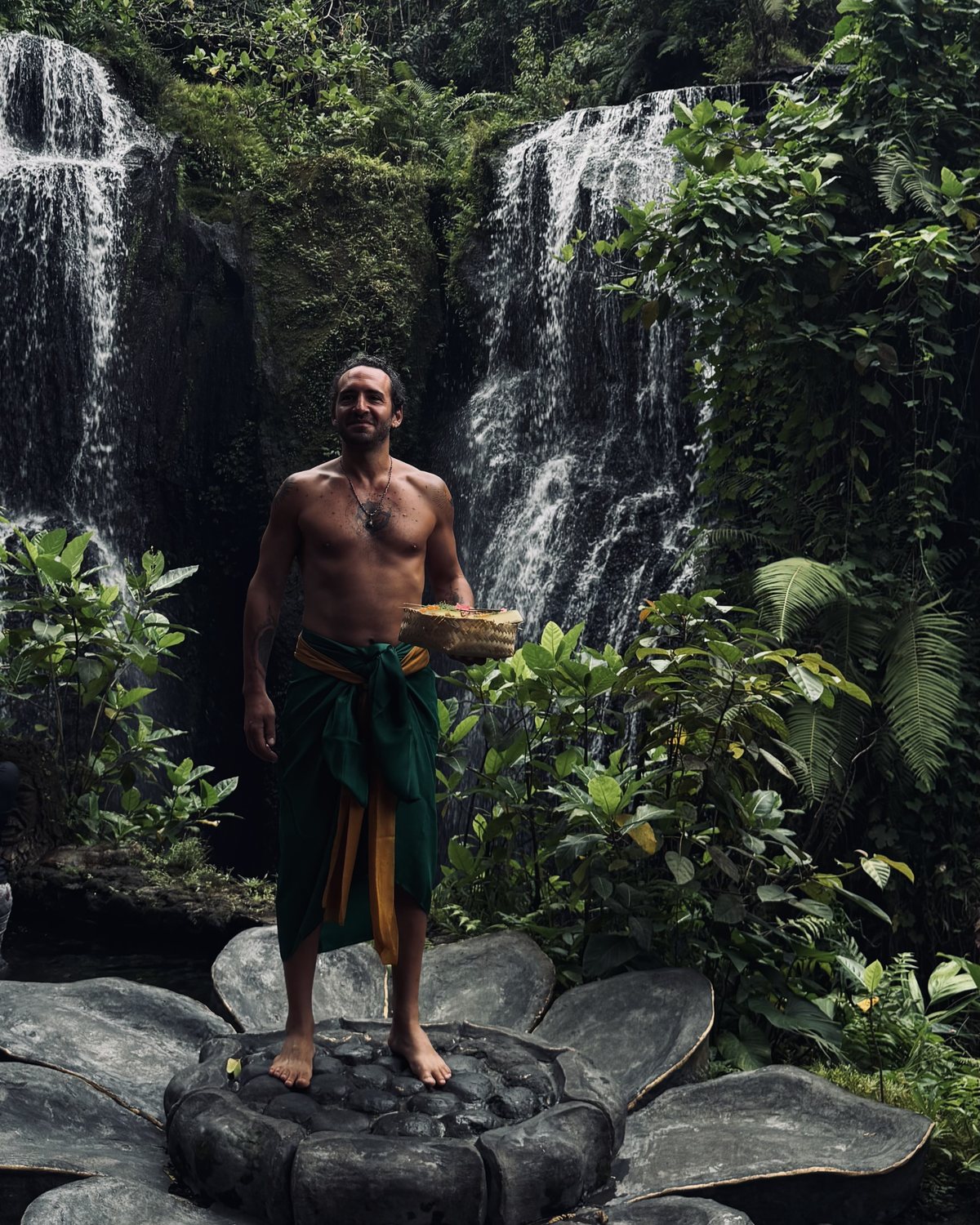
Everything I teach today came out of the balance between two extremes. On one side there's the knowledge of the West, which is exercise science, psychology and philosophy. On the other there's the tradition of Asia, which is yoga and meditation, written in the coded language of another time. Each side has its own ideal, too. The West's ideal is to improve yourself. It faces outward and looks for the meaning of life within the world. The East's ideal is to step back from the world. It faces inward and looks for meaning beyond the world. One is about the outer world, the other about the inner world. When you can't build a bridge between the two, you get confused. When you're confused, you don't know what you're doing or why, and when you don't know why, you can't keep going. I went from one extreme to the other for years.
The Beginning
In my twenties I was a graphic designer. I worked from morning till night to be a better designer and earn more money. I had pushed my emotions down and was living only in my head, far from my body. I didn't care what I ate or drank, and some days I didn't sleep at all. In the end I burned out. An overweight body, an anxiety disorder, a life that felt meaningless. Looking for a way out, I found yoga and my first teachers. Yoga put me back together, but I didn't understand why it worked. The more I read and the harder I practiced, the more confused I got. Yoga spoke the language of miracles and of a hard, strict discipline. Western philosophy, art and scientific thinking were what made me who I was. I was split in two.
India and Nepal
I decided to go to India. I was going to become a monk. My teachers wanted me to become a teacher and take over their studio. Even so, I asked them where I should go, and one of them suggested a school. I went hoping for an ashram where I would meditate with white-bearded old men, and I found a university with a hospital. At least the rules of a yogi's life were required there, so I could still live the hard, strict life. I studied yoga therapy for a year and a half and took anatomy and physiology exams in a school uniform. While I was still studying, I started teaching. For the last six months I worked with patients in every department of the hospital, under the doctors' supervision. Another teacher there, who I saw every day, explained Indian philosophy to me. He could see the confusion in my head, and he said that one day it would all come together. But that wasn't enough for me. I wanted to go further. I moved on to Nepal and practiced meditation in monasteries and retreat centers for five months. I was still going to be a monk.
The Studio Years
Then it was time for my military service, and I had to go back to Istanbul. I meant to go back to Asia afterwards, but my first teachers convinced me that it was time for me to teach. They handed me the studio they had run for twenty-five years. For eight full years I ran my own studio. Groups, private sessions, schools, companies, sports academies, and most days five classes. My way of life, though, had now gone to the other extreme. From the outside I looked like any ordinary working person, but inside, that monk was still alive. I was obsessed with enlightenment. Then COVID came, the workload grew, and so did the stress. The traditional methods, made for monks and built on avoiding pleasure, couldn't hold up under that much stress. I had forgotten how to enjoy simple things. I burned out again, gained weight, and my anxiety came back. The first time, I had burned out at the Western extreme. This time it was the Eastern one. There's no balance at the extremes.
Thailand and Bali
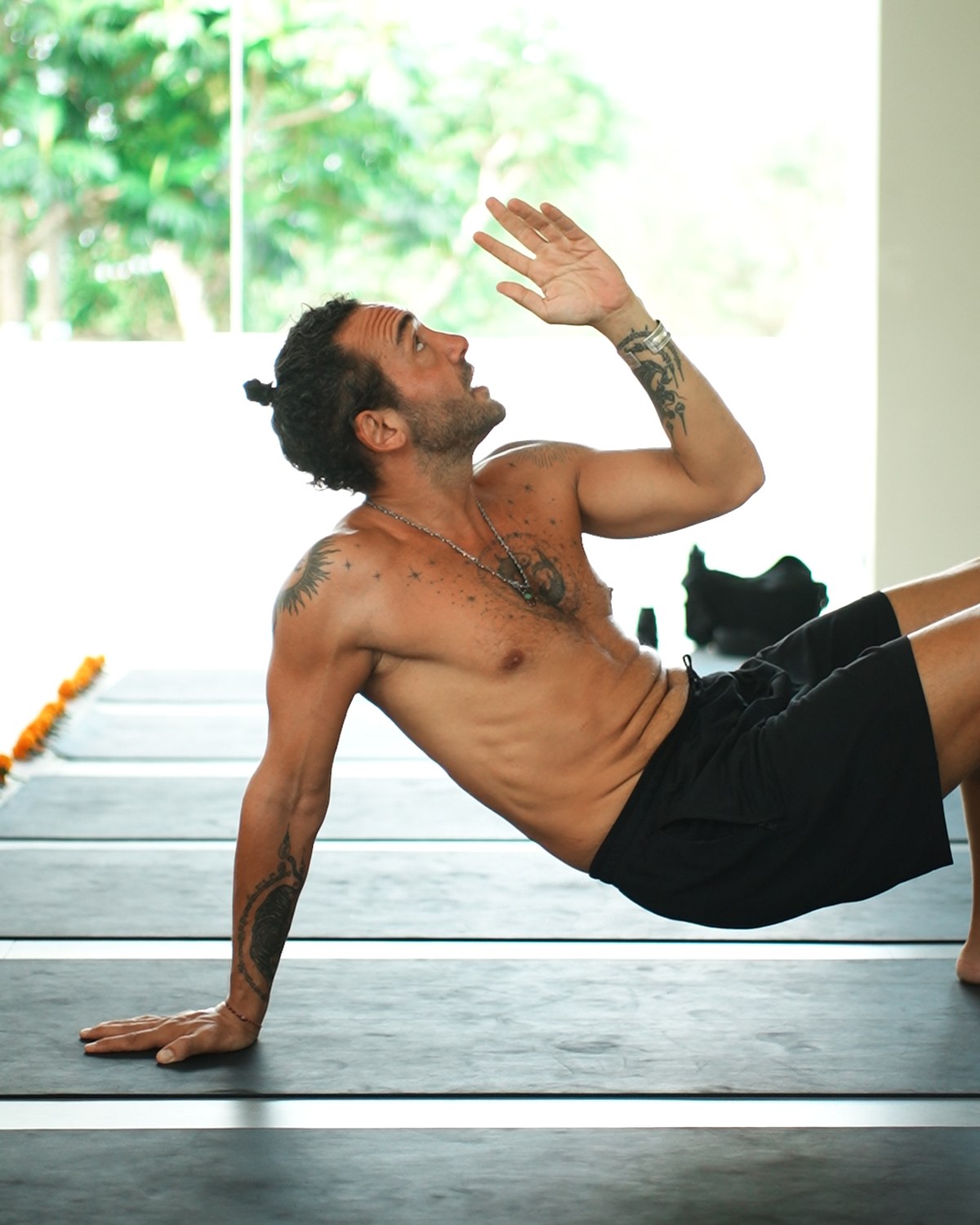
I moved the studio online and started traveling again. First two and a half years in Thailand, then about a year in Bali. This time it wasn't yoga that got me back on my feet. It was learning to enjoy life again. I let myself have again everything I had said no to in order to become a monk. I started dancing and lifting weights. The more I enjoyed life, the more I came back to myself, and the more I came back to myself, the deeper my meditation went. Now I understood the tradition through my own experience, not through books. The problem had never been the tradition. It was how it was lived. While I was going from one extreme to the other, I wasn't mature enough to see that.
The Buddha spent years in hard self-denial, but the peace he felt at the moment of enlightenment was the same peace he had felt as a child, resting under a tree. The peace I was looking for was also in my relationship with myself. I was now practicing yoga not for the ideal of becoming a monk, but for the pleasure it gave me. The method I had been building and taking apart since the day I started teaching came together right there. My teacher in India, the one who had said it would all come together, had been right.
After Thirteen Years
Today I know both worlds, and I know what I'm doing and why. I tell you where everything I teach comes from and what it's good for now, because you can only keep doing what you understand. When something is hard for you, I first ask why, and then we decide together how much you do.
In thirteen years I've worked with hundreds of people from many countries, in very different physical condition. Group classes, private sessions, workshops, online and in person. More than thirty retreats in Türkiye, Thailand and Bali. Sometimes in Turkish, sometimes in English, sometimes both at once.
I teach only what I practice myself. I speak only from what I've lived. I'm walking the same road as you, and teaching doesn't mean I've reached the end of it. Let me also tell you what I don't do. I don't take the place of your physiotherapist, your psychotherapist or your doctor. We work on the part of your health that is in your hands. I don't promise a quick transformation. I give you the routine that suits you and the reasons behind it, and the results come from your regular practice.
This is a method for getting to know yourself better, and for looking after your body, your mind and your emotions together. I hope to see you in class.
Method
Credentials
EXPERIENCE
Hospital work
Arogyadhama, Bengaluru, IndiaSix months at Arogyadhama, S-VYASA's holistic medicine hospital with 600 beds. He worked as a yoga therapist in every department of the hospital, under the supervision of doctors and senior therapists. The departments were neurology, oncology, cardiology, pulmonology, psychiatry, rheumatology, spine, diabetes and metabolic disorders, gastroenterology, endocrinology and obesity, and Positive Health.
Kaivalya Yoga Studio, Istanbul
He ran the studio full time and was its lead teacher.
Retreats
He has organized and led more than thirty yoga and meditation retreats in Türkiye, Thailand and Bali, each two to eight days long.
Corporate work
He has taught regular yoga classes at companies in a range of industries, at Bilfen High School in Istanbul and at Optimum Tennis Academy, each program adapted to the institution's needs. With employees the focus was productivity and stress management, with students exam anxiety, and with tennis players range of motion and mental training.
Private sessions
He has given one-to-one yoga and meditation sessions to people with personal goals, and to people with specific health conditions, following the recommendations of their doctors and therapists.
Online Studio
He has run the Online Studio, an international community of students practicing in live classes.
EDUCATION AND CERTIFICATIONS
Post-Graduate Diploma in Yoga Therapy
S-VYASA University, IndiaA postgraduate program lasting a year and a half, at a university where yoga therapy is taught as an academic subject. The curriculum covered anatomy and physiology, yoga psychology, common health conditions and the classical yoga texts. He completed his clinical training at Arogyadhama hospital.
RYT 500, Yoga Alliance
Samma Karuna, Koh Phangan, ThailandQualified to teach the anatomy, philosophy and sequencing modules in teacher trainings.